
Publication
The Drip: Voices On Water, Labor and Sustainability in the Fashion Industry
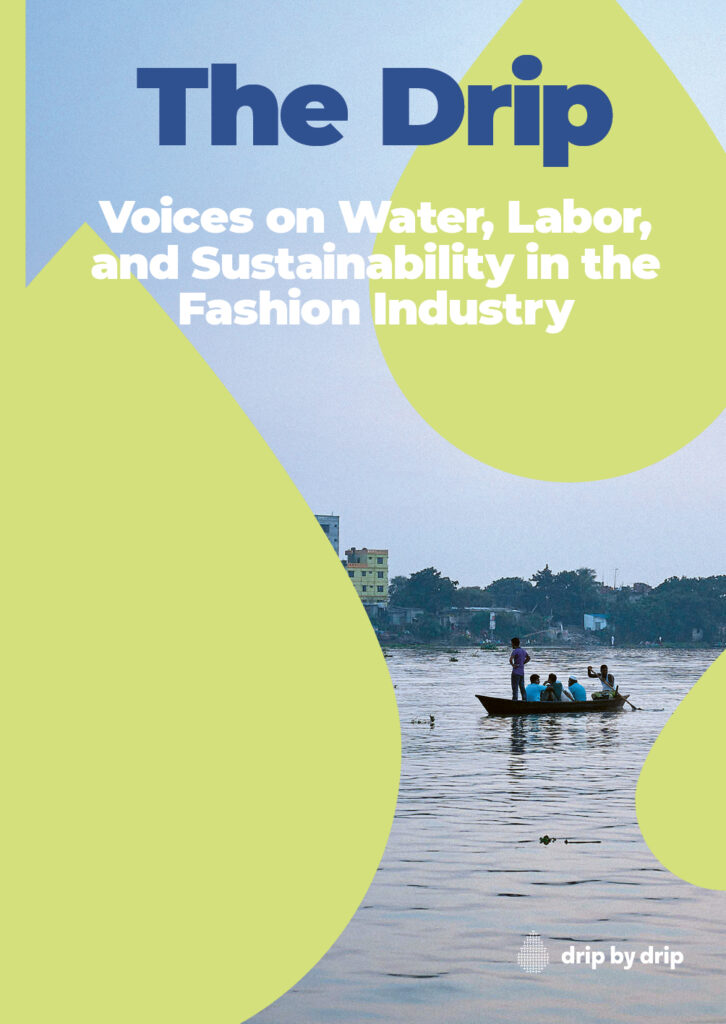
“The Drip: Voices On Water, Labor and Sustainability in the Fashion Industry”
is a publication positioned at the nexus of water and fashion, highlighting the
intersecting social, environmental and labor issues within the global fashion system and their impacts on affected communities and ecosystems.
With a particular focus on textile-producing regions in South Asia, the publication brings together eight articles that examine pressing challenges and emerging solutions around water in the global fashion system. Through worker and community testimony, research-based insights, and industry analysis, the publication paints a multifaceted picture of water governance and accountability.
With contributions by
- Adiba Afros: Independent Consultant and Researcher
- Prof. Dr. Shahriar Hossain: founder of the Environment and Social Development Organization (ESDO)
- Lavinia Muth: sustainability consultant, speaker and coach
- Mohammad Monower Hossain: Industrial Sustainability Strategist, Head of Sustainability at TEAM Group
- Thivya Rakini & Oorja Engineer: Tamil Nadu Textile and Common Labour Union (TTCU)
- Shivam Gusain: Water Engineer, Dyestuff Chemist & LCA analyst
- Humnah Fayyaz & Tabeer Riaz: Co-Founders of South Asian Young Women in Water (SAYWiW)
- Ani Wells: Sustainable Fashion & Impact Communications Consultant, Cotton Diaries
The Voices
Insights from “The Drip”
“When data is produced by locals, it conveys far more authority than external assessments. We see community members shift from helplessness to ownership.”
Ms. Farhana Islam, ESDO Program Coordinator
from: “Bridging Data and Dignity: Community-Based Monitoring in Bangladesh” By Prof. Dr. Shahriar Hossain
“I never thought I could use technology and science. Now I feel like a guardian of my village’s future.”
Ms. Taslima Khatun, Community Volunteer
from: “Bridging Data and Dignity: Community-Based Monitoring in Bangladesh” By Prof. Dr. Shahriar Hossain
From: “Beyond the audit report: A humble brand perspective on water justice, failed promises and accountability” By Lavinia Muth
“When we meet our customers, they demand state-of-the-art infrastructure, high ethical standards, low carbon and water footprints, and fair wages for workers — and rightfully so. But when it comes to price negotiations, they push for the lowest possible rates.”
Mr. Abdullah Hil Nakib, Deputy Managing Director of TEAM Group
From: “The Business Case for Sustainability: How Much is Fact; How Much is Fallacy?” By Mohammad Monower Hossain
From: “Suppressing Thirst: Water, Heat, and Exploitation In Tamil Nadu’s Garment Factories” By Thivya Rakini and Oorja Engineer
“We’re not asking for a raise…A glass of lime water—if lemon is too expensive, then at least cold water.”
Thangamani, Tailor, Erode
From: “Suppressing Thirst: Water, Heat, and Exploitation In Tamil Nadu’s Garment Factories” By Thivya Rakini and Oorja Engineer
“Tackling water risk in textiles calls for a full strategic shift. Water must move from being treated as waste after production to a core design constraint and a signal of systemic health. This requires rethinking how the industry operates. It means shifting from discharge control to input reduction, from reactive treatment to better chemical choices, from surface compliance to true transparency, and from isolated fixes to shared infrastructure and regional coordination.”
From “The Water Bargain: India, Bangladesh, and China” By Shivam Gusain
“There are only two washrooms for around 50 women,” she explained. The facilities are stretched, unhygienic, and insufficient for the number of workers who rely on them. Matters of women’s health and hygiene are never discussed or addressed. Not because women have no such concerns, but because the workplace culture simply does not acknowledge them.
From: “Evidence from Faisalabad: Assessing Environmental and Social Inequities in Pakistan’s Textile Sector By Humnah Fayyaz & Tabeer Riaz
“You used to see either floods or droughts in one year, now you see both. Farmers go years without good yields.”
Arun Ambatipudi, Organic cotton expert, India
From: “The Problem With Averages: Why LCAs Misrepresent Cotton’s Water Story” By Ani Wells
“Understanding cotton’s water story means understanding who is growing it, how they are managing risk, and what the land is asking in return. That kind of understanding cannot come from averages alone. It has to come from listening, learning, and building relationships with those who are on the ground.”
From: “The Problem With Averages: Why LCAs Misrepresent Cotton’s Water Story” By Ani Wells
“While the clothing and textile industries have created jobs for millions around the world, there is mounting evidence that it is draining one of our most precious life-sustaining environmental resources – water. Meanwhile, global textile consumption continues to rise.”
From: “On The Drip: Reflections on Water and Sustainability in Fashion and Textile Manufacturing” By Adiba Afros
“While the clothing and textile industries have created jobs for millions around the world, there is mounting evidence that it is draining one of our most precious life-sustaining environmental resources – water. Meanwhile, global textile consumption continues to rise.”
From: “On The Drip: Reflections on Water and Sustainability in Fashion and Textile Manufacturing” By Adiba Afros

Do you have any feedback on “The Drip” or suggestions for the next editions? Or are you interested in becoming a contributor to “The Drip”?
The Drip is sponsored by Engagement Global with funds from the Federal Ministry for Economic Cooperation and Development and the Berlin State Agency for Development Cooperation.