In Addis Ababa, the Amharic language filled its bustling crowded streets. The city’s smoggy air and high altitude of 2600m contributed to our difficult adjustment to limited oxygen. It was mid-May 2022, when we, a team of researchers from Drip by Drip, started our five-week exploration of Ethiopia, “the rising star” in textile production.
We set out to understand the current situation of Ethiopia’s textile and garment industry. In doing so, it was our goal to learn about the current political and economic situation and understand whether Ethiopia will be the next Bangladesh. Additionally, through a three-week collaboration with Sequa gGmbH, an NGO funded by GIZ (German Society for International Cooperation) and UKAID, we had the opportunity to visit a local factory, the Hawassa Industrial Park. There, we spoke with a large international buying agency, which acts as a liaison between major brands and production facilities. We also conducted interviews with stakeholders, which included local and foreign factory managers, factory employees, NGOs, B2B customers, ministry staff, and entrepreneurs. To protect the identity of the interviewees we will not disclose their names.
I. The Rising Star
Our preliminary research depicted Ethiopia as a budding force in textiles, possessing the capability to rival the industries of China and Bangladesh. However, we quickly discovered the lack of validity and substantiality in our online sources. The lack of data brought up questions about Ethiopia’s labor costs, work environment, industrial waste, access to water, infrastructure, investments, foreign connections, security, and health system.
In 2021, Ethiopia’s gross domestic product (GDP) grew by 5.6%, followed by 5.3% in 2022. This growth outpaced the average GDP growth in other East African countries, which was 4.7% in 2021 and 4.4% in 2022, indicating a more rapid economic advancement for Ethiopia. It is projected for Ethiopia’s GDP to maintain an upward trajectory with estimated growth rates of 5.8% in 2023 and 6.2% in 2024. Industry expansion, private consumption, and rising investments primarily fuel this expected growth. [1]
On top of this, Ethiopia has a population of roughly 110 million people, with an expected growth rate of 2.55%.[2] A country with an exponentially growing population offering a plethora of job opportunities with no legal framework of a legal minimum wage is an attractive option for investors. This is because a growing population ensures investors a growing workforce.
Additionally, Ethiopia offers low labor costs. Where there is a low labor cost, you will commonly find textile and garment businesses. The average pay wage for garment workers ranges from $340 to $95 per month, while in Ethiopia, the pay wage is set at $26 per month.[3] This causes a slow and silent factory shift from China, Vietnam, and Bangladesh to countries like Ethiopia. However, the Tigray conflict, which started in 2020 in northern Ethiopia, caused significant destabilization nationwide, impacting several sectors, including the growth of Ethiopia’s textile industry.[4]
II. Ethiopia’s Export and Import Dilemma
To investigate further, we scheduled meetings during the inital two weeks of our exploration with stakeholders in the fields of environmental science, textile production, and business management. Stakeholders included locals, professors, consultants, activists, businesspeople, and fashion designers.
Our preliminary research depicted Ethiopia on the cusps of a new era as they transitioned from a developing state to an industrial state, but it became evident that we drastically underestimated the situation. With every conversation, the illusion of the “rising star in the textile industry” vanished.
Under former Prime Minister Zenawi Haile, the Ethiopian government pursued a Growth and Transformation Plan, which expired in 2020 [5]. This plan pursued various targets, one of which was the development of industry. Under these targets, 13 industrial parks were established for different manufacturing industries – the textile and garment industry was one of them [6].
Industrial parks (IPs) are portions of a city zoned for industrial use. Through the construction and promotion of IPs, Ethiopia approached investors and companies to establish themselves at industrial parks; unfortunately, with no long-term success. [7] We learned from an Indian-owned garment company that their production capacity has shrunk by 50%.
Adding to the dilemma, the US terminated the AGOA agreement, which forced the closure of many factories. The African Growth and Opportunity Act (AGOA) is a US agreement that allows AGOA member countries to export duty-free and tax-free to the United States. Ethiopia has long been a member, but in November 2021, Biden terminated that alliance on the grounds that Ethiopia harbors violations of international human rights due to the Tigray conflict.[8] Such termination caused major producers and fashion companies, such as the PVH Group, to halt production in Ethiopia.[9]
Discussions with factory managers revealed a substantial decrease in export capacity. Previously, 60-80% of goods were exported to foreign markets, but this has now dropped to only 20-30%.
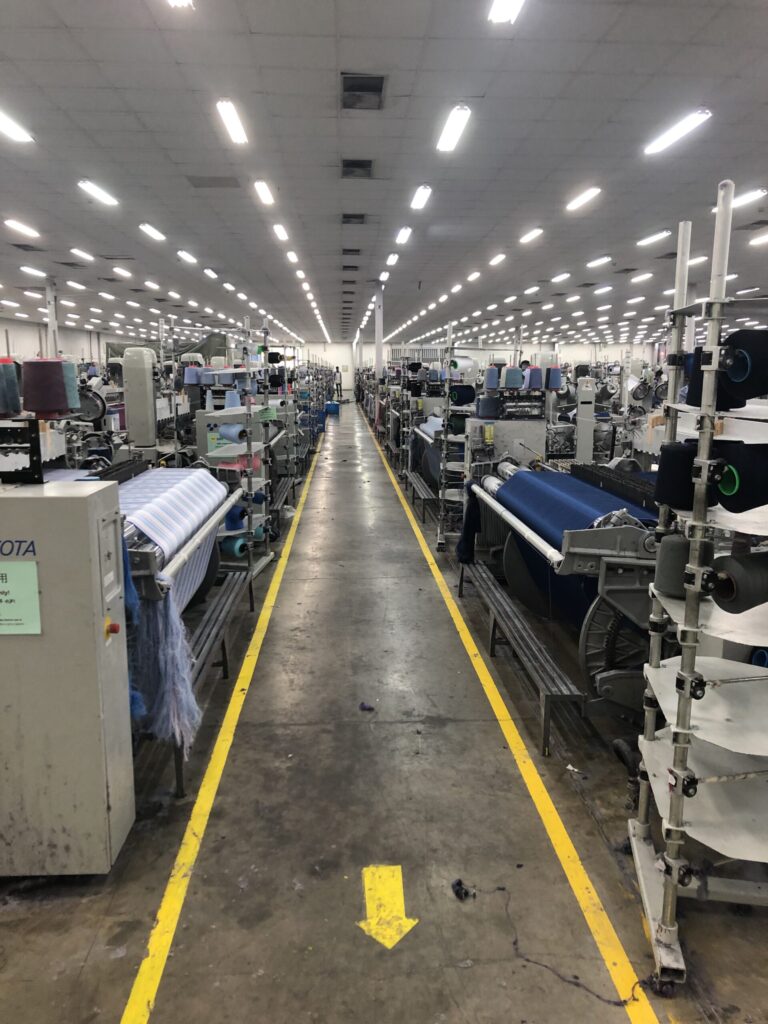
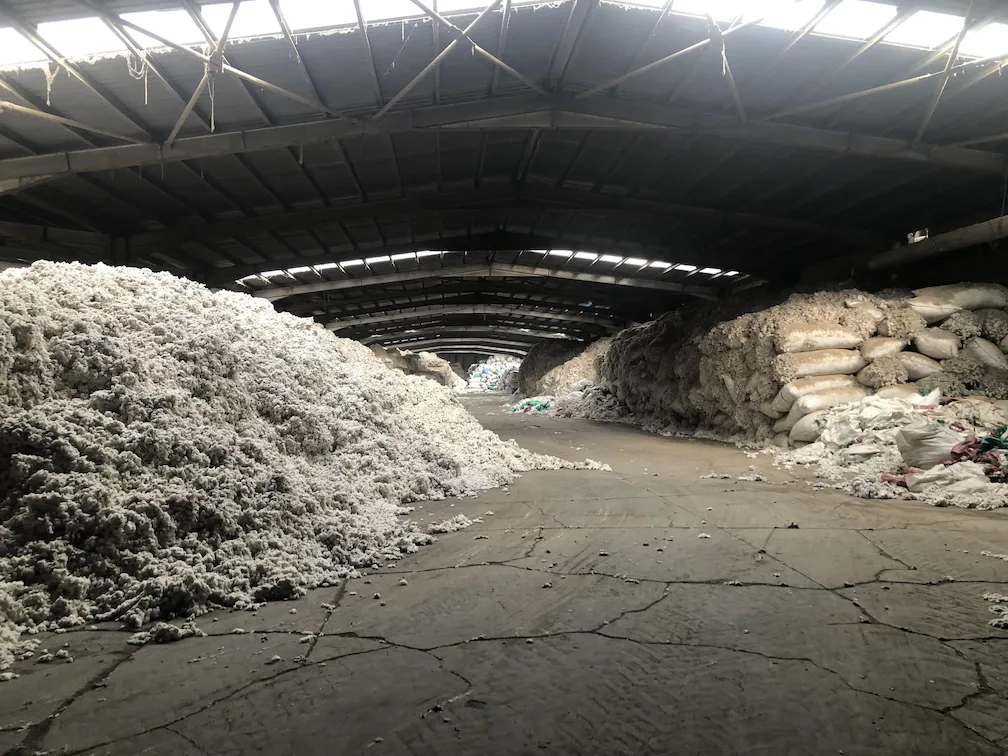
We visited the industrial park in Hawassa, the largest IP hosting 52 halls that are now mostly empty due to the AGOA termination. Hawassa’s IP stood as a foreshadow or a glimpse into the future for many foreign investors, especially from India, China, Bangladesh, and the US.